
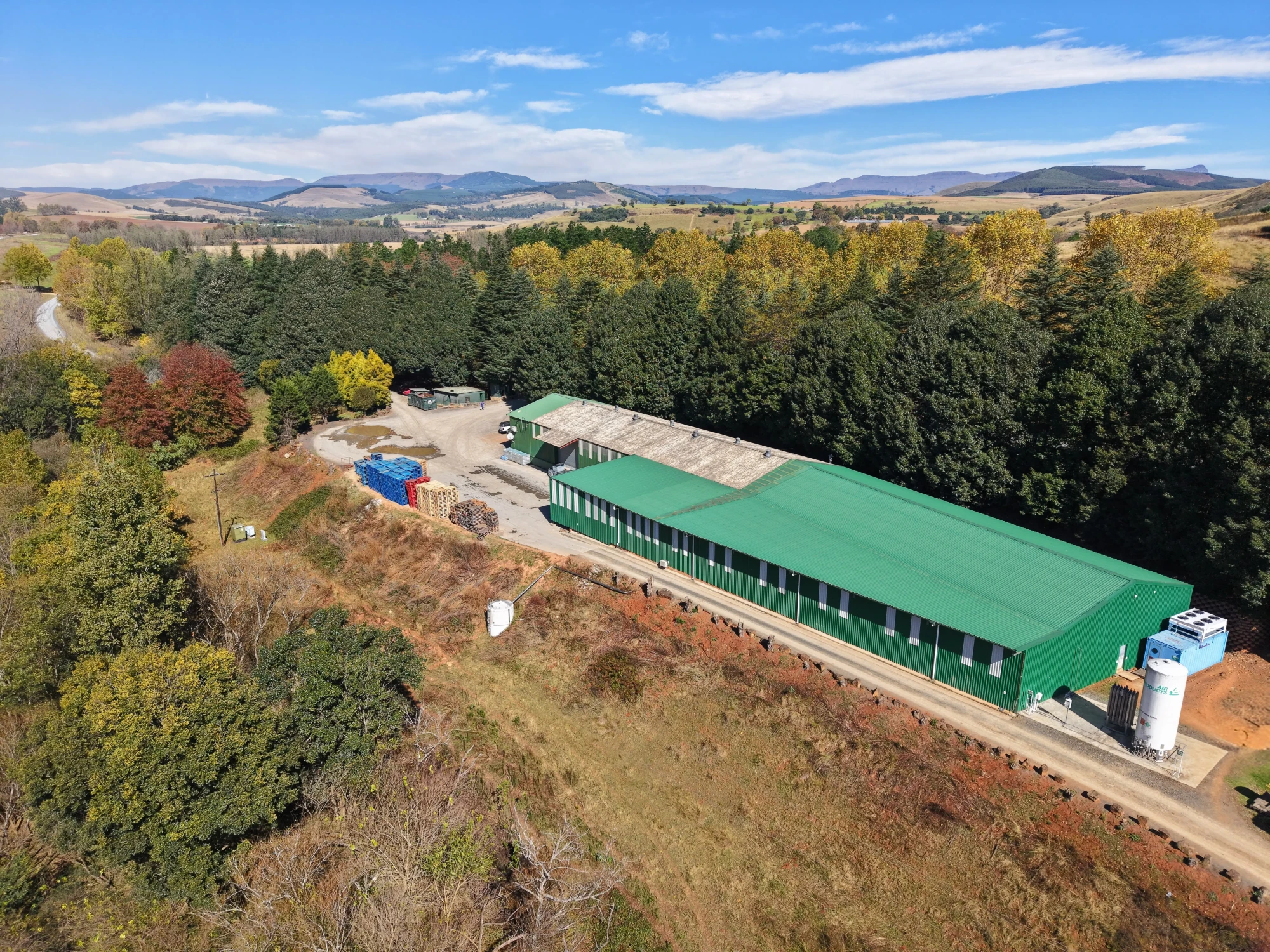
For many years we have had the privilege to partner with Dargle Water Pty Ltd with the design of their expansion projects for their bottling plant hidden in Dargle, a gem in the KZN Midlands, South Africa. With Phase 3 design currently underway, we wanted to share the history, heart and vision of this remarkable entity. This is a conversation with Erich Schravesande, the man behind one of KwaZulu-Natal’s quietly growing bottled water operations.
Where did Dargle Water begin?
It started for a contract from Coca-Cola. Simple as that. The business itself grew out of a company called Chantilly Water, which had been operating since 2000. About seven years ago there was a name change and a shareholder restructure, and Dargle Water was born. I’ve been here since day one.
How has the operation grown since then?
We started with a top factory of about 150 square metres. Then we built our first proper facility down here — around 870 square metres — and doubled that to another 870 not long after. We’re now adding an additional thousand square metres, which will cater for the processing of future blowing of bottles.
For someone who’s never thought about it — where does bottled water actually come from?
All water comes from boreholes. Whether it’s labelled as spring or mineral, it doesn’t matter — it comes from a borehole. The difference between waters comes down to the terrain and the area it’s drawn from.
We’re at the foothills of the Drakensberg, and that gives our water a completely different taste to water from the Highveld plateau — Heidelberg, for instance — or from the east or west of Johannesburg. It’s just the area.
What actually gives water its taste?
Minerals and salts play a big role, as does the pH — whether the water is acidic or alkaline. But perhaps the most important factor is total dissolved solids, or TDS. Some waters have very high TDS readings. Others are very low. That TDS level contributes significantly to taste, as does the pH.
What’s the difference between borehole water and the filtered water you see at shopping centres?
The filtered water at places like that is municipal water that’s been cleaned. It takes a very expensive plant to do it properly, and I don’t think most of those setups have the ability to strip everything out. There’s a definite difference in taste between municipal water and natural spring or mineral water. Municipal water has chlorine, fluoride, and other additives. There are no preservatives in natural spring water.
The premium water brands do have the reverse osmosis capability to remove everything, but if you look at their labels, they add the good-tasting salts back in afterwards. They rebalance the water after the process — and that definitely helps with the taste.
I think it also comes down to palate. If you’ve grown up drinking Johannesburg water, you probably won’t think it tastes that bad. People develop preferences based on what they’ve always known.
How do you differentiate Dargle Water in what is a fairly crowded market?
Our water has its own taste — I’d describe it as very neutral. Very tatsteless. There are certainly good waters in the canned and bottled market, and some that aren’t as good, but it really does come down to what each person’s palate prefers.
What does the future look like for Dargle Water?
We’re going to grow into the next phase of our business. It’s taken a long time to evolve to where we are, and we’ll continue growing , but we’re not going to grow indefinitely. If anything, after the next growth, we’ll open another plant in another province. It’s not going to be an endless growth. Eventually this plant will supply KZN.
We currently supply private-label brands for Spar across KwaZulu-Natal, Gauteng, and Mpumalanga. The Eastern and Western Cape have their own bottlers.